

The “AS-IS” Clause. Are You Actually Protected?
The "As-Is" Clause Won't Save a Dishonest Seller. Here's What It Actually Protects.
I see sellers across Burlington, Oakville, and Hamilton sprinkle the "as-is" clause and disclaimer across their listings like it's a force field. Sign it, and every leaky pipe, cracked foundation, and mould problem magically becomes someone else's headache. That belief is wrong, and it’s a great way to find a lawsuit eighteen months after closing.
Here's the truth: "as-is" tells a buyer you're not making repairs and you're not promising the place is perfect. It does not erase your legal duty to disclose what you know. Ontario courts have been consistent on this for years, and RECO's own guidance backs it up. If you know something is wrong and you stay quiet, that clause won't save you.
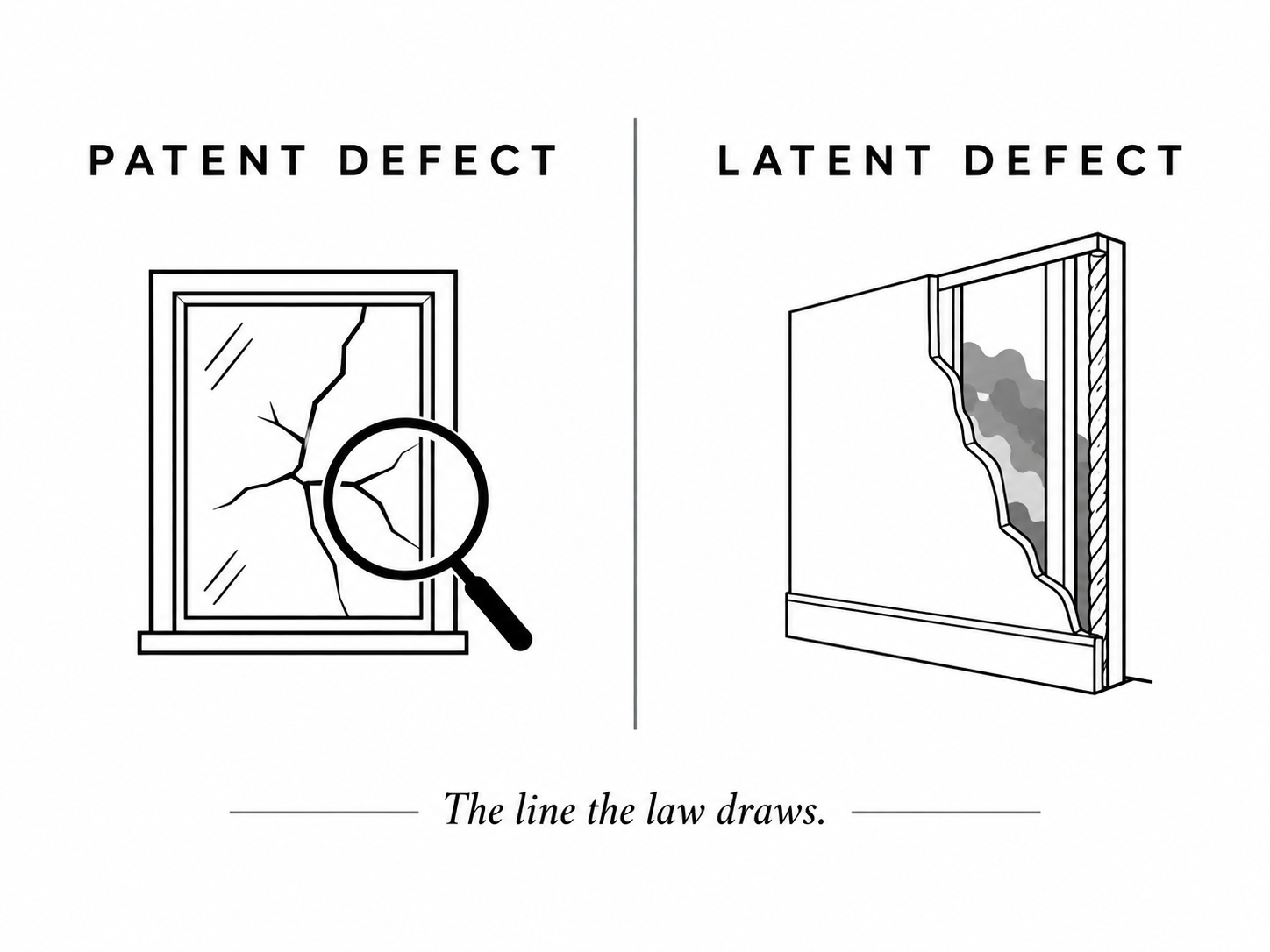
Patent vs. Latent: The Line That Decides Everything
The whole legal framework rests on one distinction. A patent defect is something a buyer or their inspector can see, a cracked tile, a stained ceiling, a sticking door. Buyer beware applies here. You don't have to point it out, and frankly, you shouldn't need to.
A latent defect is hidden. Water damage sealed behind fresh drywall. A foundation crack tucked under insulation. Knob-and-tube wiring nobody thought to mention. If it's material, meaning it makes the home unsafe or unfit to live in, and you know about it, you have to disclose it. "As-is" doesn't erase that obligation.
Three Ways "As-Is" Stops Protecting You
Courts have shown three situations where that clause offers zero cover. First, a known latent defect that threatens safety or habitability, think toxic mould or a fire-hazard electrical panel, has to be disclosed regardless of what the contract says. Second, active concealment kills the protection outright. Painting over water stains or boarding up a structural crack before listing isn't a grey area, it's fraud. Third, if a buyer asks you directly, "Has this basement ever flooded?" and you lie or dodge with a half-truth, you're exposed to a misrepresentation claim. The clause was never built to shield deception.
What I Tell Every Seller Before They Sign
If you know about a problem, tell me. I'd rather negotiate around a disclosed issue than defend an undisclosed one after the deal closes. An inspection report before listing, even on a property you plan to sell "as-is," protects you as much as it protects the buyer. And if a buyer's agent puts a question to you in writing, answer it honestly. If you don’t know for sure, that is a valid answer. Let’s work off facts and hire experts for answers.
Selling "as-is" isn't a loophole. It's a statement that you're not fixing anything and you're not warranting the home's condition, full stop. It was never meant to let anyone hide the truth, and Ontario's courts have made sure it doesn't.
If you're weighing a sale in Burlington, Oakville, or Hamilton and you're not sure how "as-is" language applies to your property, that's a conversation worth having before you list, not after an offer's on the table.
Finally, BE CAREFUL WHO YOU HIRE! Both on the Seller side and the Buyer side.
Call me for truthful advice with experience to back it.
Andrew Mclellan
Price It Right and Show It Well™
