

We Need to Stop Pretending the Market Is Just Three Boxes
Buyers’ market. Sellers’ market. Balanced market.
I’ve never loved how simple that sounds. Mostly because it is too simple.
If real estate really worked like three neat boxes, half of what we see every day would not make sense. Why would anyone sell in a buyers’ market? Why would anyone buy in a sellers’ market? And yet, some of the highest volume years in history happened during what everyone agreed was a sellers’ market. 2021 being the obvious example.
So the real question is not which of the three labels we are in. The real question is what kind of cycle we are actually living through.
According to Bank of Montreal’s 2026 outlook, the better description right now is a bear market. Prices are flat to slightly down. Confidence is fragile. Optimism is selective.
If you look back at Ontario in the 1990s, prices took more than a decade to recover. The U.S. housing crash in 2007 took roughly the same amount of time to get back to peak levels. When you overlay those charts with where we are today, the similarities are hard to ignore.
The only real unknown is the shape of the recovery.
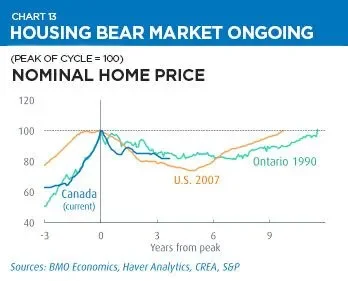
Do we see a sharper V, with one more leg down before prices rebound? Or is this a slower U, where prices grind sideways for years before meaningfully moving higher?
Either way, here is the part sellers need to hear clearly. This market is not about affordability anymore. It is about value. And there is a big difference.
The K-Shaped Economy Can Lie to You
The K-shaped economy became a buzzword during the pandemic. Some people did incredibly well. Others fell behind. Certain property types exploded while others stalled.
That idea still exists today, but in Canada it is often less about income and more about geography.
When Calgary is flying, Ontario tends to be sluggish. When Ontario heats up, other regions cool off. You see it clearly in housing starts. Montreal is running well above last year’s pace while Toronto is sitting far below its long-term average.
The U.S. is the clearest example of how misleading a K-shaped economy can be. Holiday spending in 2025 topped one trillion dollars. That sounds bullish, until you realize it was not driven by more people spending. It was driven by fewer people spending more.
The ultra-wealthy moved the needle. Everyone else was cautious.
We see the same thing locally. Overall prices in the GTA are down, but the top end tells a different story. Homes above ten million dollars have held up far better. Some are even trading above 2021 levels.
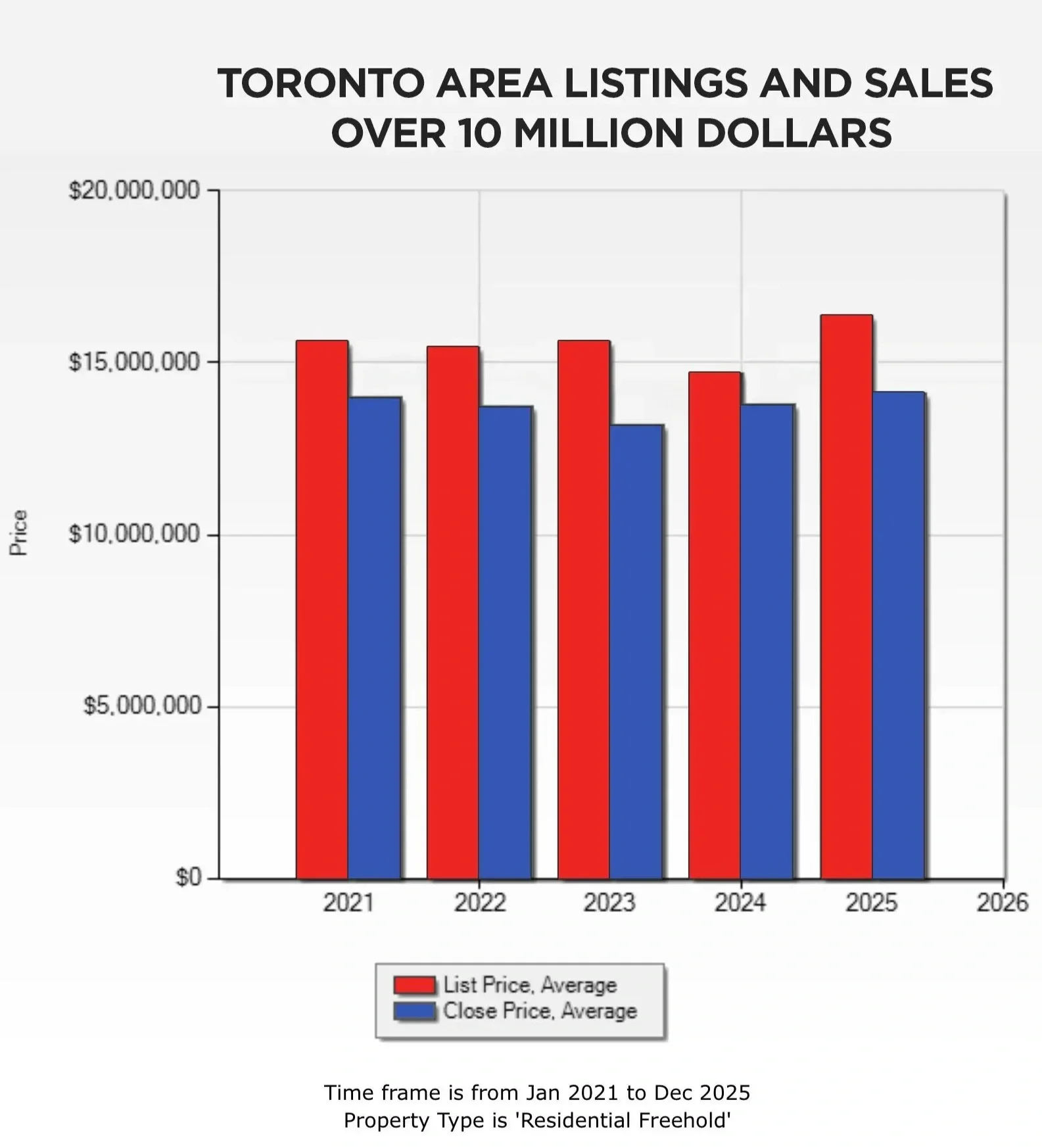
This is why average price can be dangerous. A handful of big sales can distort the picture and send buyers and sellers in the wrong direction. This is where good advice actually matters. The job is not to repeat headlines. It is to explain what is really happening underneath them.
From Watching to Doing in 2026
Whether or not you follow the Lunar Zodiac, the themes line up almost too well.
2025 was the Year of the Snake. Quiet. Analytical. Observant. That tracks. Buyers and sellers sat on their hands. They watched rate announcements. They consumed doom-filled headlines. They waited.
2026 is the Year of the Horse. Action-oriented. Decisive. Relentless.
That does not mean reckless. It means prepared and willing to move when the numbers make sense. In real estate, the people who win in these markets are not the ones who guess right. They are the ones who have a plan and execute it.
For sellers, that means pricing based on reality, not nostalgia. For buyers, that means understanding value instead of waiting for a perfect headline that never comes.
You Still Have Time to Think. Just Not Forever.
A lot of people spent the last year quietly thinking. That was not wrong. Reflection was rational.
But analysis without action eventually turns into paralysis.
If we want better outcomes for buyers and sellers, we need to stop talking in vague labels and start having more honest conversations about pricing, timing, and strategy. Not fear-based. Not hype-driven. Grounded. Local. Data-backed.
That is how people make good decisions in uncertain markets.
And that is exactly what 2026 is going to reward.
